Performing Arts – Tamil Nadu
Music in Tamilnadu
The music and dance of Tamil Nadu had their beginnings in the temples. From early times, different groups of people were appointed to sing divine songs in the temple. Officers called Thevara Nayakams or leaders of the world of music arranged the private worship of kings and group singing.
Odhuvars, Sthanikars or Kattalaiyars offer short musical programmes in the temples by singing the devotional Thevaram songs. Musicians had total reliance on divine grace. They lead the chorus in the temple congregational prayers to the accompaniment of the Sarangi. Sarangi was in use in the temples of Tamil Nadu till the end of the nineteenth century.
The temples at Madurai, Tirunelveli, Sucindhram, and Azhwar Thirunagar have musical pillars. Such pillars are found in the Artha Mandapam where the singing of Thevaram was accompanied by the music from the stone-pillars.
Karnātic Music
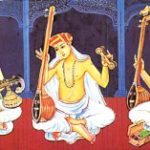
What is Karnātic Music? : It is the classical music of Southern India. The basic form is a monophonic song with improvised variations. There are 72 basic scales on the octave, and a rich variety of melodic motion. Both melodic and rhythmic structures are varied and compelling. This is one of the world’s oldest & richest musical traditions. Why Karnātic Music? “…I [Todd M. McComb] value Karnātic music first for the effectiveness with which it can build positive mental discipline. It helps me to focus and organize my thoughts and it helps to eliminate negative mental habits…”
Indian classical music is categorized under two genres. These are Hindusthāni and Karnātic. Broadly speaking, Hindusthāni developed in the northern regions of the country, while Karnātic music is indigenous to the south.
Karnātic music is considered one of the oldest systems of music in the world. Imbued with emotion and the spirit of improvisation, it also contains a scientific approach. This is mainly due to the contributions of such inspired artists as Purandara Dhāsa, known as the Father of Karnātic Music, and other scholars who codified the system and gave it a clear format as a medium of teaching, performing, prayer and therapy.
The basis of Karnātic music is the system of ragas (melodic scales) and Thāḷas (rhythmic cycles). There are seven rhythmic cycles and 72 fundamental Rāgas. All other rāgas are considered to have stemmed from these. An elaborate scheme exists for identifying these scales, known as the 72 Meḷakarthā Rāgas.
Karnātic music abounds in structured compositions in the different rāgas. These are songs composed by great artists and handed down through generations of disciples. While the improvised elaboration of a raga varies from musician to musician, the structured portion is set. These compositions are extremely popular, with a strong accent on rhythm and lively melodic patterns. Three saint composers of the nineteenth century, Thyāgarāja, Muthuswāmi Dikṣhithar and Śhyāma Śhāstri, have composed thousands of songs that remain favourites among musicians and audiences.
An important element of Karnātic music is its devotional content. The lyrics of the traditional compositions, whether mythological or social in nature, are set entirely against a devotional or philosophical background.
The Nineteen Forties were a rather turbulent period for Karnātic Music in Tamil Nadu because of the Tamizh Isai controversy. More than a controversy, it was a move by some well meaning people to increase the number of Tamil songs being sung in concerts in Tamil Nadu. Started by Raja Sir Aṇṇāmalai Chettiār and spurred on by individuals like Sir R.K.Ṣhaṇmugham Chettiār and journalist Kalki Kriṣhṇamūrthy, it tried to create a lot of awareness among musicians and rasikas that language had a role in music.
Today after so many decades, without the existence of a formal movement, we do find musicians and rasikas enjoying Tamil songs in Tamil Nadu, Kannada songs in Karnataka and so on. Listeners do make fervent appeals to musicians about singing songs in the language they are familiar with and musicians oblige them without much ado.
Ancient Tamil music
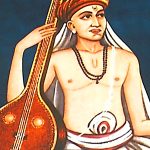
The tradition of Tamil music goes back to the earliest period of Tamil history . Many poems of the Sangam literature , the classical Tamil literature of the early common era , were set to music. There are various references to this ancient musical tradition found in the ancient Sangam books such as Ettuthōgai and Paththupāttu . The early narrative poem Silappathikāram , belonging to the post-Sangam period also mentions various forms of music practiced by the Tamil people . Music was also utilized in the compositions of the Tamil Śhaiva saints such as Appar , Thirugnyāna Sambanthar and Māṇikkavāsagar during the Hindu revival period between the sixth and the tenth centuries CE. The musical poet (sandakkavi) Aruṇagirināthar further embellished the Tamil musical tradition through his compositions of Tamil hymns known as Thiruppugazh .
Karnātic music in Tamilnadu
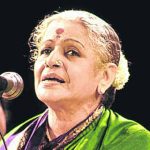
Karnātic music , which is the classical music form of Southern India, has a long history in Tamil Nadu. Tamil Nadu has produced a number of famous performers, as well as a closely related classical dance form Bharathanātyam . Chennai hosts a large cultural event, the annual Madras Music Season , which includes performances by hundreds of artists.
The composers belonging to the Tamil Trinity of Muthu Thāndavar (1560 – 1640 CE), Aruṇāchala Kavi (1712-1779) and Mārimutthā Pillai (1717-1787) composed hundreds of devotional songs in Tamil and helped in the evolution of Karnātic music. Three saint composers of the 18th to 19th Century, Thyāgarāja , Muthuswāmi Dikṣhitar and Śhyāma Śhāstri , have composed thousands of songs that remain favourites among musicians and audiences. Today, Tamil Nadu has hundreds of notable Karnātic singers who spread this music all over the world. M . S . Subbulakshmi , a renowned Karnātic singer, had the honour of singing a song in the UN Security Council .
Intricacies of Folk Music
Tamil folk music is remarkable for the Thāḷa intricacies. Very ancient classical ragas or melodies like Manji, Sama, Navaroz, Kalyāṇi, Karaharapriya, Thoḍi, and Nādhanāmakriya are used in the folk-songs. Many instruments are used in folk music.
- Musical Notation Of Tribes
The hill-tribes have a natural fondness for music and they are known for the preservation of ancient culture. The Pulayar tribe describe their melodies as thāḷams. According to them, their melodies are derived from the cooing of birds such as Gānamayil, Gānakkozhi. Thāḷam and melodies are named after their deities. Karaganachi thāḷam, Maṅgaḷanādha thāḷam, Kundhanādha thāḷam, etc. are all specific melodies. The chāya of classical ragas like Shuddhasāveri, Saraswathi, Śhankarābharaṇam, Āndholika, Brindhāvanasāraṅga are to be seen in these beautiful melodies. Their orchestra is known as Singāram (literally meaning beauty), consisting of two small sized Nādhaswarams or Sathathakkuzhal, two drums or melam and a pair of cymbals or Kaimaṇi, Vīlikuzhal (flute) and Maththaḷi (a long drum) are played by them to invoke the gods. They sing while they dance. Some of their music is rudimentary only serving as a background for dance.
- Melody of the Kuḷavai
The Kuḷavai sound is made by the women engaged in agricultural work with a turn of the tongue which they move swiftly side ward. The Kuḷavai song is sung in beautiful melody, particularly in Thanjāvūr where agricultural prosperity and music tradition alike have been kept up. Women stand in knee-deep slush, planting the seedlings and they raise the Kuḷavai sound to expedite work and to honour visitors. Anyone passing between paddy fields has to make token payments or tips to these women, if they greet him in chorus.
- Nayyāṇdi Méḷam
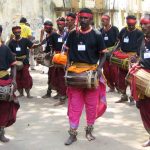
Nayyāndi Méḷam or Chinna Méḷam is a rustic imitation of the classical méḷam or Nādhaswaram and is intended purely as an accompaniment to folk-dance-drama to cater to the tastes of the unlettered audience. This orchestra consists of two Nādhaswarams, two Thavils, a Pambai, a Thamukku, and a pair of cymbals. The peculiarity of Nayyāndi Méḷam is that the instrumentalists also dance while playing the instrument. The troupe is in demand as an accompaniment to Karagam, Kāvaḍi, Dummy-horse show, and gypsy-dance, popularly known as the dance of the Kuravan and Kuraththi.
Folk music
Ekkāḷam , A traditional wind instrument of Tamil Nadu
Folk singing remains popular, especially in rural areas; elements of the traditional styles are sometimes used in film music. There are contemporary enthusiasts, like Vijayalakshmi Navaneethakrishnan and Pushpavanam Kuppuswamy, who have worked to revive popular interest in the folk music of Tamil Nadu.
The rural hill tribes of Tamil Nadu each have their own folk traditions. The Pulayar , for example, perform melodies called thāḷams which are said to come from the cooing of birds. Each thāḷam is named after a deity, including Kunhanada thāḷam, Mangaḷanādha thāḷam and Karaganachi thāḷam.
Film music
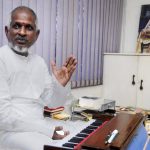
Tamil Cinema is well known for its talented composers. Two of the most famous and acclaimed film composers of India, Ilaiyaraja and A . R . Rahman are from Tamil Nadu. Other prominent Tamil film score and soundtrack composers in the industry include Harris Jayaraj , Yuvan Shankar Raja , Vidyasagar and Thomas Rathnam . During the 1960s and 1970s, prominent film composers K . V . Mahadevan , M . S . Viswanathan and others were popular.
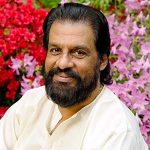
The film music of Tamil Nadu is widely known for its innovation and eclecticism. Scores may showcase blends of Karnātic, Western and other instruments, with a range of melodic and rhythmic patterns. Orchestral themes and minimalist songs often feature. Recent trends show the prevalence of synthesizers and other electronic instruments.
Tamil Christian Kīrthanai

Tamil Christian Keerthanai,(Keerthanai meaning Songs of Praise) are devotional Christian lyrics in Tamil.
A century ago, this term would have immediately conjured up the names of three lyricists who formed the Triumvirate of Tamil Christian poets: Vedanāyagam Sāstriār of Tanjore, Kriṣhṇapillai of Paḷayamkottai , and N . Samuel of Tranquebar .
These are mostly a collection of indigenous hymns written by Protestant Tamil Christian poets. A few of them are translations of Christian hymns from other languages.
These hymns were written in the early stages of Protestant Christianity in India. These hymns are widely used in worship services by the Tamil Churches belonging to the “main-line” or traditional denominations. Some of the more popular hymns include “Mangalam Selikka” (used during wedding celebrations) and “Ellām Yesuve”.
Dance in Tamilnadu
Dance in South-India, is anchored to age-old tradition. This vast sub-continent has perpetuated to varied forms of dancing, each shaped by the influences of a particular period and environment. These pristine forms have been preserved through the centuries, to become a part of our present culture, a living heritage which is both our pride and delight. Nurtured in temples, princely courts or villages, dance has moved into the auditorium of today, bringing pleasure to many more people, in far-flung regions.
Bharathanātyam
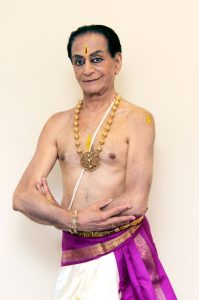
Bharathanātyam is an Indian classical dance form from the state of Tamil Nadu, which represents the language of rhythm and melody in different patterns of curves, angles and lateral movements. The basis of the dance is the synchronization of rhythmic movements of the hands, symmetry of movement in footwork, poetic gestures and facial expressions. Bharathanātyam has a devotional basis and owes its origins to Dhevadāsis (temple dancers). The musical instruments used to accompany Bharathanātyam are Mridangam, Manjīra (Thāḷam), Vīṇā, Violin, Kanjīrā, Veṇu and Thambūra.
Folk Dances in Tamilnadu
- Karagāṭṭam
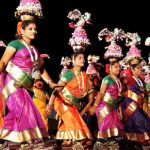
Karagam is a folk dance with musical accompaniment, performed balancing a pot on the head. ḷTraditionally, this dance was performed by the villagers in praise of the rain goddess Māri Amman and river goddess, Gangai Amman, with water pots balanced on their heads.
- Kummi
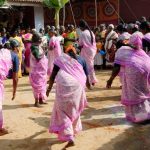
Kummi is one of the most important and ancient forms of village dances of Tamilnadu. It originated when there were no musical instruments, with the participants clapping their hands to keep time. This is performed by women.
- Mayil Āṭṭam
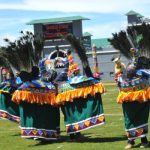
This is done by girls dressed as peacocks, resplendent with peacock feathers and a glittering headdress complete with a beak. This beak can be opened and closed with the help of a thread tied to it, and manipulated from within dress.
- Kolāṭṭam
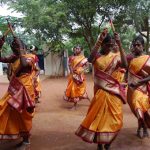
Kolāṭṭam is an ancient village art. This is mentioned in Kanchipuram as ‘Cheivaikiyar Kolāṭṭam’, which proves its antiquity. This is performed by women only, with two sticks held in each hand, beaten to make a rhythmic noise.
- Oyil Kummi
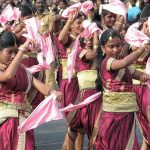
This is an ancient folk dance form popular in Trichy, Salem, Dharmapuri, Coimbatore and Erode. No other musical instruments are used in this dance except the ankle-bells. This dance is performed by men only, during temple festivals. Stories and episodes centering around Murugan and Vaḷḷi are depicted in the songs. As one of the rare folk art forms of ancient Tamil Nadu, this is being practiced now by the Telugu speaking people of the northern districts.
- Kāvaḍi Āṭṭam
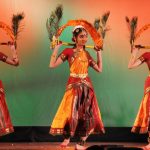
The ancient Tamils when they went on pilgrimage, carried the offerings to the gods tied on the either end of the long stick, which was balanced on the shoulders. In order to lessen the boredom of the long travel they used to sing and dance about the gods. Kāvaḍi Āṭṭam has its origin in this practice. Special songs were created to be sung while carrying the Kāvaḍi Sindhu. This dance is performed only by men. It is done by balancing a pole with pots fixed on either end, filled with milk or coconut water.
Poikkāl Kudhirai Āṭṭam
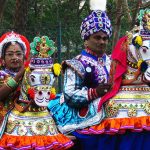
This is the Dummy Horse Dance where the dancer bears the dummy figure of a horse’s body on his/her hips. This is made of light-weighted materials and the cloth at the sides swings to and fro covering the legs of the dancer. The dancer dons wooden legs, which sound like the hooves of the horse. The dancer brandishes either a sword or a whip. This folk dance needs much training and skill. This dance is accompanied by Nayyāndi Méḷam or Band music. This is connected to the worship of Iyyanār and prevails mainly around Thanjāvūr.
Theatre in Tamilnadu
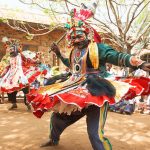
Tamil Nadu had developed the art of entertainment to its pristine heights at an early age. The three modes of entertainment classified as “Iyal” (Literature), “Isai” (Music) and “Nāḍagam” (Drama) had their roots in the rural folk theatre like Therukūtthu. Therukūtthu (street play) is the vibrant living theatre of Tamil Nadu. Therukūtthu is more popular in the northern districts of Tamil Nadu and is normally conducted during village festivals, during the months of Panguni (March-April) and Āḍi (July-August). The stories are taken from epics such as Rāmāyaṇa and Mahābhāratha, and also local folklore. Usually the play starts in the late evening and gets over only during the small hours of the nights. The performance is so interesting that the audiences are spellbound unaware of the longs hours. Notwithstanding, there is also the culture of Super Theatre, entertainment evenings offered by corporate houses and NGOs who bring theatre into the banquet halls of city’s choicest restaurants either as a service to their valuable customers or in aid of some special and noble cause. This has been on the rise in recent times, spanning at least one every other month. Leading food and clothing brands in the state bring about theatre productions domestically, regionally as well as internationally.
Bibliography
http://www.culturopedia.com/Performing_Arts/Art_Tamil_Nadu.html
http://en.wikipedia.org/wiki/Music_of_Tamil_Nadu
http://www.hotelstamilnadu.com/folkmusic.htm
http://www.mapsofindia.com/tamilnadu/music-and-dance/
http://en.wikipedia.org/wiki/Dance_forms_of_Tamil_Nadu
http://www.hotelstamilnadu.com/dances.htm
http://www.indiasite.com/tamilnadu/dances.html